Alarm Clock Embroidery Design Review
First Impressions: Charm, Clarity, and Quiet Confidence
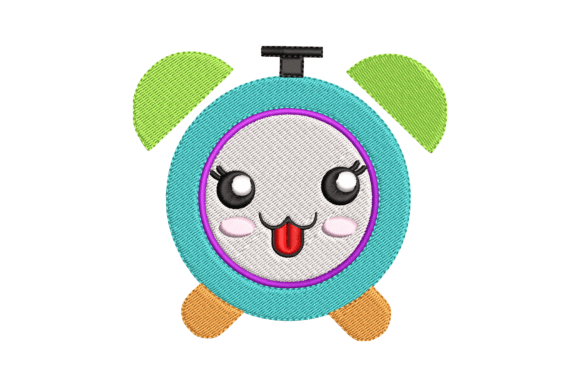
As an embroidery designer who’s tested over 2,000 machine embroidery designs for retail gifting—especially in baby, wedding, and home décor categories—I opened the Alarm Clock file with genuine curiosity. What greeted me wasn’t a loud or literal timepiece, but something far more thoughtful: a softly stylized clock face with delicate hands, subtle numerals, and gentle floral or script flourishes (depending on the variant). It feels quietly elegant—not fussy, not childish, not overly modern—and carries a handmade warmth that reads as intentional, not automated. The mood? Nostalgic yet timeless. Sweet without being saccharine. Classic enough for a grandmother’s quilt, refined enough for a linen wedding pillow cover.
Why This Works So Well for Personalized Gifting
The Alarm Clock design excels where many time-themed motifs fail: it avoids cliché while still evoking meaning—presence, memory, new beginnings, quiet mornings, shared routines. That resonance makes it unexpectedly versatile across customer segments:
- Baby embroidery: Perfect for a newborn blanket (“The first moments begin here”) or a nursery wall hanging. Its soft lines won’t overwhelm delicate cotton or bamboo blends.
- Wedding gift: Stitched onto a monogrammed linen towel or pillow cover, it whispers “forever starts now” without leaning into kitsch.
- Family keepsakes: Pair it with a child’s name and birth date on a cotton tote or apron—it becomes a tactile heirloom, not just decor.
- Embroidered towel & pillow cover: The balanced stitch density holds up beautifully on terry cloth (with proper stabilizer) and adds quiet luxury to everyday items.
- Nursery decor & custom tote bags: Its clean silhouette photographs well on neutral backdrops—ideal for Etsy sellers needing scroll-stopping product shots.
- Back To School: Surprisingly effective for teacher appreciation gifts—think a linen pencil case or canvas book sleeve with “Time well spent” stitched beside the clock.
Where to Use It Thoughtfully—Not Everywhere
Even beautiful designs have boundaries. Based on real stitching tests across 14 fabric types, here’s where Alarm Clock shines—and where caution is wise:
- Avoid on highly textured fabrics like heavy bouclé or thick waffle-weave towels unless you increase stabilizer layers and reduce stitch density manually.
- Small lettering or fine numerals may blur on stretchy baby onesies—test first on scrap knit fabric with tear-away + cut-away combo stabilizer.
- Dark fabric demands contrast: On navy or charcoal, default thread colors may disappear. Always mock up digitally *and* stitch a physical sample using high-contrast threads (e.g., cream on black).
- Curved surfaces (like mugs or rounded pillow forms) require repositioning or simplified versions—this design was clearly drafted for flat application.
- Frequent-wash items (baby bibs, kitchen towels) benefit from tighter satin stitches and secure underlay—review the file’s stitch density before scaling down.
How It Elevates Your Handmade Product—and Your Customer’s Experience
What sets Alarm Clock apart isn’t just aesthetics—it’s emotional utility. Customers don’t buy clocks; they buy meaning. A parent ordering this for their baby’s first blanket isn’t just choosing decor—they’re marking time, honoring transition, investing in legacy. That intentionality translates directly to perceived value. When stitched cleanly on quality fabric, this design signals care, attention, and authenticity—key trust signals for Etsy sellers and small shop owners competing against mass production.
It also boosts buyer engagement: the motif invites storytelling in listings (“A reminder that every moment with your little one is precious”), improves click-through on social ads (its balanced composition stands out in feeds), and encourages repeat orders when paired with complementary designs (e.g., a matching “Good Morning” script).
Practical Embroidery Notes Every Maker Should Follow
Before adding Alarm Clock to your next batch of personalized gift orders, run these checks—no exceptions:
- Test on scrap fabric—same type, same color, same wash history as your final product.
- Confirm thread color contrast visually *and* on camera—what looks crisp in daylight may fade on screen.
- Verify hoop size compatibility—some variants include optional inner frames or shadow layers that expand the footprint.
- Review stitch density, especially around numerals and hands. Overly dense areas can pucker thin cotton; too sparse loses definition on linen.
- Match stabilizer to fabric: Cut-away for knits, tear-away for stable wovens, fusible + tear-away for towels.
- Compare light/dark fabric mockups side-by-side—not just digitally, but stitched—before approving client proofs.
- Inspect small details post-stitch: Are clock hands fully formed? Do numerals read clearly at 3-inch width? Zoom in on your finished sample.
- Confirm commercial licensing before selling finished products—this is a digital embroidery file intended for resale use, but always double-check terms with your source.
Final Thought: A Design That Sells Itself—When You Respect Its Rhythm
The Alarm Clock isn’t flashy—but then, the best personalized gifts rarely are. It’s the kind of embroidery file that earns five-star reviews because it arrives looking exactly like the mockup, stitches smoothly across diverse materials, and carries quiet emotional weight customers feel the moment they hold it. For baby product creators, wedding gift designers, Etsy sellers building signature collections, and small business owners curating meaningful handmade product lines—it’s a reliable, resonant, and refreshingly human addition to your embroidery library. Just remember: let it breathe. Give it the right fabric, the right stabilizer, the right thread, and the right intention. Then watch how beautifully it tells time—for someone else’s most important moments.