1ST Rule Grade Embroidery Review
A Professional Designer’s Take on Real-World Brand Use
As an embroidery designer who’s developed hundreds of machine embroidery designs for small businesses—from indie bakeries and florist studios to pet boutiques and creative co-ops—I approached 1ST Rule Grade with a very specific question: Does this design translate into trusted, scalable brand assets—or is it purely decorative? The answer matters most when you’re stitching for revenue, not just craft.
First Impression: Friendly Authority with Handmade Warmth
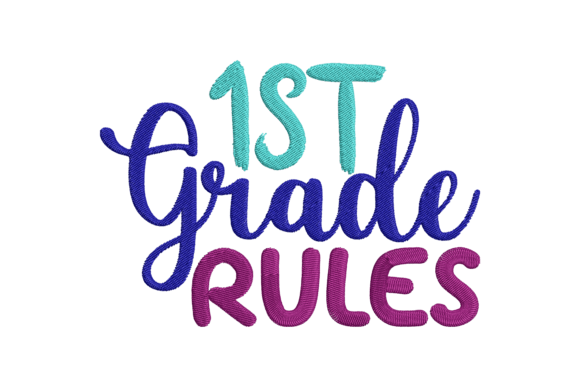
Right away, 1ST Rule Grade reads as approachable yet intentional—neither overly academic nor cartoonish. The title suggests structure and values (“Rule”), while “Grade” implies growth, learning, or tiered quality—making it a natural fit for Back To School collections, but also surprisingly versatile for lifestyle brands that emphasize craftsmanship, mentorship, or community standards. Visually, based on its description—“an art form that can elevate any fabric, adding a touch of elegance and charm”—I interpret this as a design rooted in clean line work, balanced negative space, and thoughtful proportion—not fussy, not minimalist, but intentionally composed. That’s gold for small business merch.
Where It Shines: Patches, Uniforms & Everyday Brand Touchpoints
1ST Rule Grade excels where clarity, consistency, and quiet confidence matter:
- Embroidered patches: Ideal for iron-on or sew-on application on aprons, tote bags, and staff jackets. Its likely balanced weight and legible structure hold up well at 2.5"–3.5" sizes—common for boutique merchandise and café team uniforms.
- Cap embroidery: Works beautifully on structured front panels (think baseball caps for a local studio or flower shop). As long as lettering isn’t micro-fine, the design avoids distortion on curved surfaces.
- Apron embroidery: A standout choice for handmade product makers—it conveys care without pretension, reinforcing authenticity on linen, canvas, or denim.
- Tote bag design: Scales elegantly from 4" to 6", anchoring the side or center panel with visual weight that feels considered—not slapped on.
- Product packaging accents: Think stitched tags on ceramic mugs, soap wraps, or gift boxes. When paired with neutral thread colors, 1ST Rule Grade adds tactile credibility to handmade goods.
For Etsy sellers and craft-based brands, this design supports a cohesive brand identity without shouting. Customers subconsciously associate its poised rhythm with reliability—key for building trust in competitive niches like pet wellness, sustainable fashion, or artisanal food.
Where to Proceed Thoughtfully
No embroidery file is universally bulletproof—and 1ST Rule Grade deserves smart execution, especially for commercial use:
- Small patch sizes (<2"): If fine outlines or tight kerning exist, test stitch-out first. Tiny lettering may blur; simplify or adjust spacing before production.
- Dark uniforms or textured fabric: High stitch density can flatten on fleece or heavy twill. Confirm stabilizer choice—cutaway works best for durability on work shirts and aprons.
- Frequent washing: Reinforce backings and avoid overly delicate fill patterns. Ask your digitizer: does this hold integrity after 50+ wash cycles?
- Curved cap fronts: Always run a physical mockup—not just a digital preview—to assess how letterforms flow across the dome.
Brand Impact: More Than Just a Logo Accent
Used intentionally, 1ST Rule Grade does more than decorate—it signals alignment. For a small business, that means:
- Professionalism without coldness: It feels human-scaled, not corporate-generic.
- Visual consistency: Whether stitched on a barista’s apron or a floral delivery tote, it anchors your look across touchpoints.
- Perceived value lift: Embroidery adds texture and permanence—customers equate that with care and longevity.
- Buyer engagement: On Etsy or local markets, embroidered details invite touch, photo-sharing, and word-of-mouth. It’s memorable because it’s tactile.
This isn’t just a digital embroidery file; it’s a subtle ambassador for your values—especially if your brand centers on growth, integrity, or joyful learning.
Practical Designer Notes Before You Stitch
Before committing to bulk runs or client deliverables, here’s what I always do with a new design like 1ST Rule Grade:
- Test it in black and white first—eliminates color bias and reveals contrast issues.
- Check how it reads at your smallest intended patch size (e.g., 1.75" for sleeve accents).
- Review thread color contrast against your base fabric—especially on dark uniforms or natural linens.
- Inspect spacing between elements—tight letters or overlapping shapes may need manual adjustment.
- Confirm hoop size compatibility with your commercial embroidery machine setup.
- Stitch a sample on your actual fabric—not just felt or stabilizer alone.
- Use appropriate stabilizer: tear-away for stable cottons, cutaway for knits or stretchy blends.
- Create a printable mockup for client approval—realistic context builds confidence faster than a vector preview.
- Compare it beside your other design assets (logos, fonts, icons) to ensure harmony—not competition.
- Verify commercial licensing terms before using on products for resale. This is non-negotiable for small business merch.
Remember: the strength of 1ST Rule Grade lies not in complexity, but in confident simplicity. It doesn’t try to be everything—it aims to be right, consistently, across aprons, caps, totes, and tags. And in small business branding? That kind of quiet reliability is rare—and powerful.