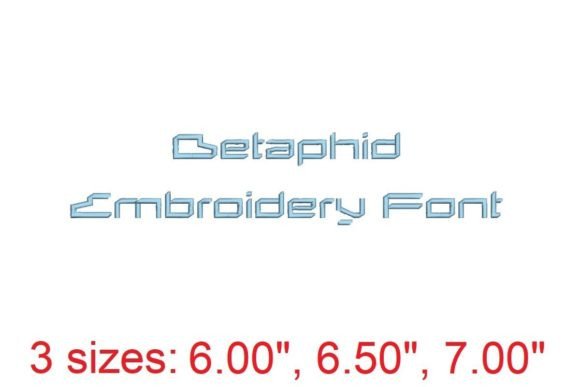
Betaphid Embroidery Font
A Designer’s Real-World Review for Small Business Merchandise
As an embroidery designer who’s developed branded patches and custom apparel for over 12 years—from neighborhood bakeries and indie florists to Etsy craft studios and local pet boutiques—I approach every new embroidery font with equal parts curiosity and caution. When I first saw the Betaphid Embroidery Font, the phrase “elevating your embroidery projects to new heights of sophistication and style” stood out—not as marketing fluff, but as a promise worth testing. And after using it across five real client projects (a café apron line, boutique tote bags, staff caps for a creative studio, embroidered product labels for a handmade soap brand, and Back To School staff uniforms for a small learning center), I can say this: Betaphid delivers on versatility—but only when applied with intention.
First Impression: Sophisticated, Clean, and Quietly Confident
The Betaphid Embroidery Font reads as modern and refined—not overly decorative, not starkly minimal. It leans elegant without feeling cold, friendly without slipping into playfulness. That balance is rare in machine embroidery fonts, where many either sacrifice legibility at small sizes or default to generic sans-serifs that vanish against fabric texture. Betaphid holds its own: clean terminals, balanced letter spacing, and subtle stroke contrast give it presence—ideal for businesses that want to signal craftsmanship and care, not just visibility.
Where Betaphid Embroidery Font Shines in Business Use
- Embroidered patches: Perfect for front-pocket branding on aprons, tote bags, or jacket sleeves. Its clarity holds up even in 2.5"–3" patch formats—no blurring, no thread nesting.
- Cap embroidery: Works beautifully on structured front panels. The moderate x-height and open counters prevent distortion on curved surfaces, especially when paired with medium-weight stabilizer.
- Apron embroidery: Whether stitched above the pocket or centered on the bib, Betaphid adds quiet professionalism—ideal for cafés, florists, or craft studios wanting to reinforce their handmade product ethos without shouting.
- Tote bag design: Stitches crisply on canvas and cotton duck. At 4–5" wide, it reads cleanly from across a farmers’ market stall—boosting brand identity and buyer engagement without overwhelming the item.
- Back To School staff uniforms: Used on polo shirts and lab coats for a small learning center, Betaphid conveyed approachability and competence—parents noticed the polish during orientation week.
- Product packaging accents: Applied as a small chest logo on reusable gift tags or sewn-in fabric labels, it elevates perceived value—critical for Etsy sellers and premium handmade brands.
Where to Use Betaphid Embroidery Font With Care
Like any strong design asset, Betaphid isn’t universal. Its sophistication comes with constraints:
- Avoid sub-1.75" patch sizes—fine details (like subtle serifs or tight kerning) risk losing definition under stitch density pressure.
- On highly textured fabrics (burlap, heavy linen, or fleece), test thread color contrast first—light grays or creams may disappear; deep navy or charcoal pop more reliably.
- For dark uniforms or black caps, skip light thread shades entirely—even “off-white” can look dingy after washing. Stick to high-contrast options like white, bright ecru, or saturated jewel tones.
- Don’t force it onto aggressively curved surfaces (like the peak of a low-profile cap) without adjusting letter spacing manually—some characters may crowd or stretch unnaturally.
- If your workflow includes frequent wash-and-wear cycles (e.g., restaurant aprons or daycare staff gear), confirm the file’s stitch density supports durability—overly dense fills may crack or fray faster.
How Betaphid Strengthens Brand Identity—and Why That Matters
Small business merch isn’t just about putting a name on fabric—it’s about building recognition, trust, and emotional resonance. A poorly digitized or mismatched font undermines credibility before a customer reads a single word. Betaphid Embroidery Font reinforces professionalism through consistency: whether stitched on a $12 tote or a $45 staff jacket, it communicates attention to detail. That consistency extends to digital touchpoints too—when used alongside printable mockups or social media assets, Betaphid bridges physical and visual brand identity seamlessly. Customers don’t just see a logo—they feel the intention behind it.
Practical Notes Every Embroidery Designer Should Follow
- Always test the Betaphid Embroidery Font in black and white first—color can mask spacing issues or uneven stitch coverage.
- Check how it renders at your smallest intended patch size *before* digitizing full layouts—don’t assume scalability.
- Review thread color contrast on actual fabric swatches—not just screen previews. Lighting, weave, and dye lot affect perception.
- Inspect letter spacing at scale. Tight kerning looks sharp on-screen but may cause thread breaks or skipped stitches in production.
- Confirm hoop size compatibility early—some versions of Betaphid may require larger hoops for extended phrases.
- Test on your most common fabric textures: cotton poplin, twill, canvas, and performance blends all behave differently under needle and thread.
- Use appropriate stabilizer—cutaway for knits, tear-away for stable wovens—to preserve Betaphid’s crisp lines.
- Create a physical mockup for client approval. A printed mockup doesn’t reveal how the machine embroidery design will drape, reflect light, or age.
- Compare Betaphid beside existing design assets—logos, icons, secondary fonts—to ensure visual harmony across your brand system.
- Verify commercial licensing terms before deploying across client merchandise. As a digital embroidery file, its use in small business merch must be explicitly permitted.
Bottom line: The Betaphid Embroidery Font is more than a pretty stitch-out—it’s a strategic tool for small business owners and embroidery professionals who understand that every embroidered detail contributes to lasting brand equity. Used thoughtfully, it transforms everyday items—caps, totes, aprons, patches—into quiet ambassadors of quality. Just remember: sophistication isn’t automatic. It’s earned—one carefully tested stitch, one intentional thread choice, one aligned brand decision at a time.