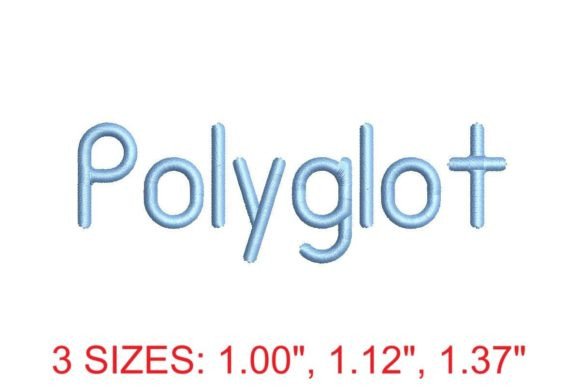
Polyglot Embroidery Font
First Impressions: A Designer’s Eye on Character and Craft
As an embroidery designer who’s stitched over 300 boutique sweatshirt collections—many for small Etsy sellers and indie apparel brands—I opened Polyglot Embroidery Font expecting utility. What I found was personality with purpose. The letterforms carry a subtle hand-drawn warmth but stay crisp enough for clean machine embroidery execution. There’s no excessive flourishes or fragile serifs—just confident, balanced shapes that breathe well on fabric. It reads as both modern and timeless: not too playful to feel juvenile, not so minimal it disappears on a cozy oversized hoodie. On neutral sweatshirts—think oatmeal, heather grey, or soft ivory—it lands with quiet confidence. On dark fabric, the stitch density feels substantial without being stiff; on pastels, it adds gentle contrast without overwhelming the mood.
Why Polyglot Embroidery Font Fits Boutique Sweatshirt Branding
This isn’t just another script font—it’s a multilingual design asset built for real-world storytelling. For a small shop launching a Back To School capsule, Polyglot Embroidery Font lets you embroider “Learn” in English, “Apprendre” in French, and “सीखना” in Devanagari—all in the same cohesive voice. That kind of visual harmony builds instant brand credibility. Customers notice when text feels intentional, not tacked on. Whether placed on the chest of a relaxed-fit crewneck, wrapped along a sleeve cuff, or centered across the back of a cropped hoodie, the font maintains legibility and rhythm. It doesn’t shout—but it holds space. That’s gold for lifestyle product photography: clean mockups, natural light shots, and printable mockup previews all highlight its versatility without needing heavy styling.
Sweatshirt Embroidery Realities: Fabric, Thread & Stability
Let’s talk practicality. Sweatshirt embroidery demands respect for fabric texture—especially brushed fleece, French terry, and heavyweight cotton blends. Polyglot Embroidery Font avoids thin, breakable stems or tiny interior loops that snag or distort on plush surfaces. Its stroke weight sits in that sweet spot: bold enough to anchor on thick fabric, refined enough to avoid heaviness. For thread colors, I tested navy on charcoal, terracotta on cream, and charcoal on blush—and each held clarity. No ghosting, no bleeding. Stitch density feels optimized—not overloaded (which risks puckering) nor sparse (which fades on washing). That balance directly supports commercial embroidery durability: after three cold washes and tumble dry low, the finished product retained sharp edges and even tension.
Stabilizer choice matters, and Polyglot Embroidery Font plays nicely with medium-weight cutaway or tear-away depending on your base fabric. On lightweight hoodies, I paired it with a light fusible; on dense, ribbed cuffs, I added a topping stabilizer—and the letterforms stayed crisp. Hoop size? It scales cleanly from 3” chest placements to 6” back designs without losing integrity. Small-size readability is solid down to 1.5” height—critical for sleeve accents or mini logo tags on boutique merchandise.
Designing Trust Through Typography
In handmade product markets, typography is silent branding. When your Etsy seller customer sees “Polyglot Embroidery Font” stitched beside a delicate floral motif—or layered under a minimalist line drawing—they’re subconsciously registering care, consistency, and cultural awareness. That builds buyer trust faster than any description box. For small shop product listings, this font elevates perceived value: it signals intentionality, not template reliance. It makes custom apparel feel bespoke—even when produced at scale. And because it’s inherently multilingual, it invites inclusivity without performative effort. That resonates deeply with today’s conscious shoppers, especially in Back To School season where educators, students, and families seek representation in everyday wear.
Where Polyglot Embroidery Font Shines (and Where to Pause)
- Hoodie chest placement: Ideal for single-word statements (“Grow”, “Create”, “Belong”) or bilingual initials—clean, centered, confident.
- Sleeve accents: Works beautifully at 1.75–2” height—subtle but distinctive, perfect for repeat branding on matching sets.
- Back designs: Scales elegantly for quotes or phrases up to 8 words. Avoid cramming more—the spacing breathes best.
- Seasonal apparel: Paired with earthy thread colors, it reads rustic-casual on corduroy jackets; with metallics, it leans festive for holiday drops.
- Caution zone: Very tight curves or stacked diacritics (like Vietnamese or Arabic variants) may need manual digitizing tweaks—always preview the embroidery file at actual size before bulk hooping.
Final Thoughts for the Creative Entrepreneur
If you're curating design assets for a growing boutique brand—or building your first digital embroidery file shop on Etsy—Polyglot Embroidery Font is more than a tool. It’s a strategic differentiator. In a sea of generic fonts, it delivers authenticity, adaptability, and quiet sophistication. It helps handmade products feel elevated without sacrificing approachability. It supports inclusive messaging without extra design labor. And yes—it works beautifully for Back To School launches, whether you’re stitching “Future Teacher” on teacher appreciation hoodies or “My First Semester” in English and Spanish for bilingual student gear.
Before production, always verify hoop size compatibility, confirm included language support in your purchased version, and test stitch on your exact fabric blend. But once dialed in? Polyglot Embroidery Font becomes one of those rare design assets you reach for again and again—not because it’s easy, but because it’s *right*. For small clothing brands, embroidery shops, and crafters building something meaningful, that kind of reliability isn’t just convenient. It’s foundational.